There is a wide variety of products available for coloring hair which claim to be pure henna, or which claim to contain pure henna powder along with additional natural plant ingredients. There is no international standard for what can be marketed as henna, and it is often difficult to tell which products are what they claim to be. Many henna for hair products lack an ingredient declaration. A package may show only some ingredients or have no ingredients list at all.
Additionally,products which claim to contain all-natural ingredients vary inquality as there are nointernationally agreed upon standards for “all natural”.Powders may be poorly sifted, containing sand or larger plantparticles which make for difficult application and removal. Stale orlow dye-content henna products may contain additives such asadditional dyes or metallic salts to compensate for poor quality ofmaterials. Green dye may be added to henna powder to make it lookfresher.
TheFDA has a standard for henna and products entering the UnitedStates labeled as a “henna” hair coloring product. Theseguidelines are do not appear to be regularly enforced as areregulations for products labeled as henna for use on skin.
The FDA forbids thesale of and is empowered to confiscate of any hennaproduct labeled for skin use, or products showing images of hennaused on skin. Customs and border protection is empowered to searchthe importing company’s website to determine if henna is intended foruse on skin, and may seize and destroy henna that appears to beimported for use on skin.
This article is thefirst of a series that will test and compare various “henna forhair” products which have been found online on sites such as Amazonand Ebay, in import stores inthe USA, and in ‘health food stores’. The purpose of thesestudies will be to determine the quality of those products incomparison to Ancient Sunrise® Henna for Hair products, and to testfor the existence of dye additives. This series will feature articlesinvestigating products within the following categories:
1.“Pure” henna, herbal henna mixes, and red result henna for hair products
2. Brunette result henna for hair products
3. Black result henna for hair products
This article willcover the first category by investigating nine samples of retailhenna hair dye products which are labeled and/or advertised as 100%pure henna, a 100% natural mix of henna and additional “herbs”,or as henna-based hair products which claim to color the hair red.Subsequent articles will report on henna for hair products claimingto color hair brunette and black.
The first part of this article will report on product labeling, visual and textural qualities of the products as dry powders, and visual and textural qualities of products when mixed with liquid to form a paste. The second part of this article will report the results of paper chromatography tests designed to determine the existence of dyes, lawsone or otherwise, in each sample.
Sample Selectionand Label Analysis
Nine “henna”hair dye products were selected based on the following criteria:
1) The product claims to contain only 100% natural henna.
OR
2) The product claims to be 100% natural, containing henna along with additional “herbs.”
AND
3) The product either claims a red result or does NOT claim to dye the hair brunette or black.*
*Products that claim to contain henna and other plant powders for brunette and black hair results will be tested and reported in future articles.
Not all productsthat are marketed as 100% pure henna state explicitly state a haircolor result, as some are marketed for both hair and skin, as well asfor mixing with other plant dye powders such as indigo. Henna hasbeen used for hair, skin, and home remedies for centuries. It can beassumed that if a product claims to be 100% henna, it should providea reddish result on lighter hair..
These products area random collection of henna products purchased in shops and online,easily accessible to the retail consumer. In fact, very few brands,if any, submit their plant dye powders to the same testing standardsas Ancient Sunrise®. Ancient Sunrise® products are sent to anindependentlaboratory for multiple tests prior to sale to ensure they do notcontain adulterants, accidental or deliberate.
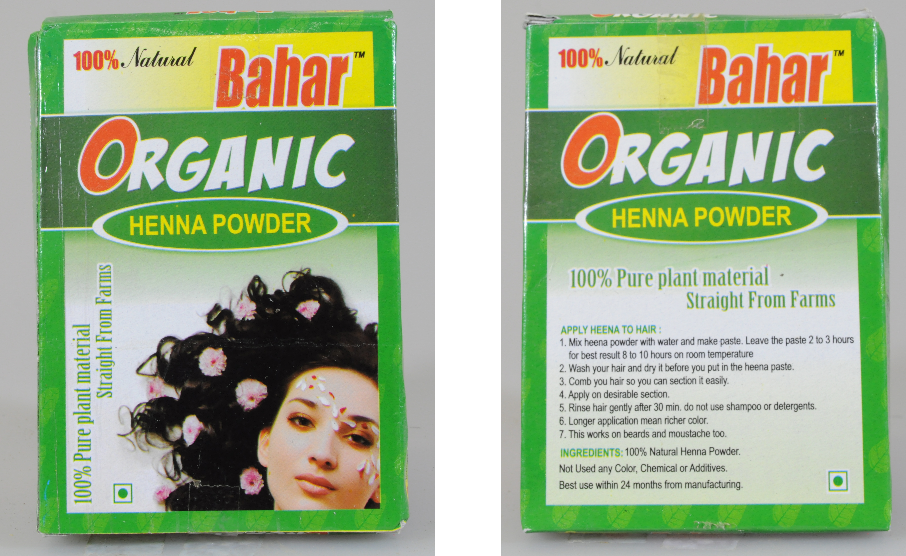
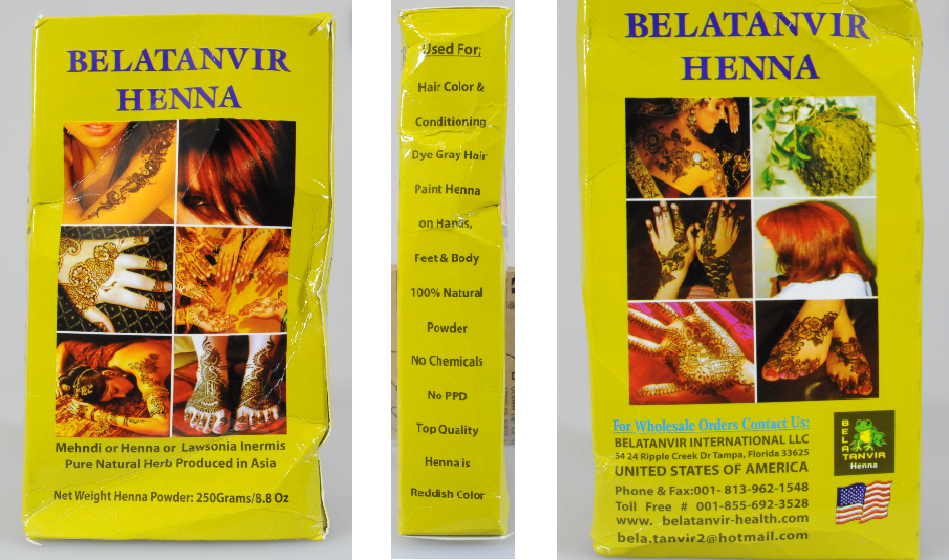
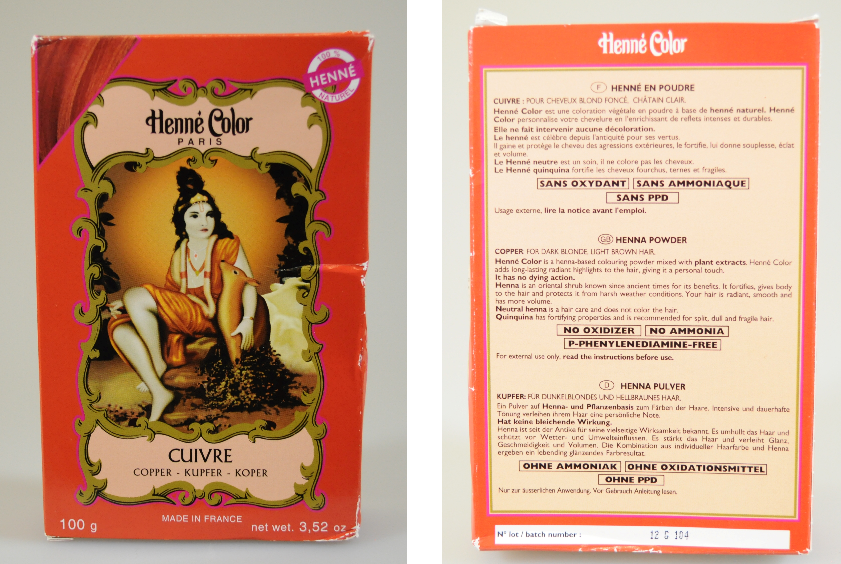
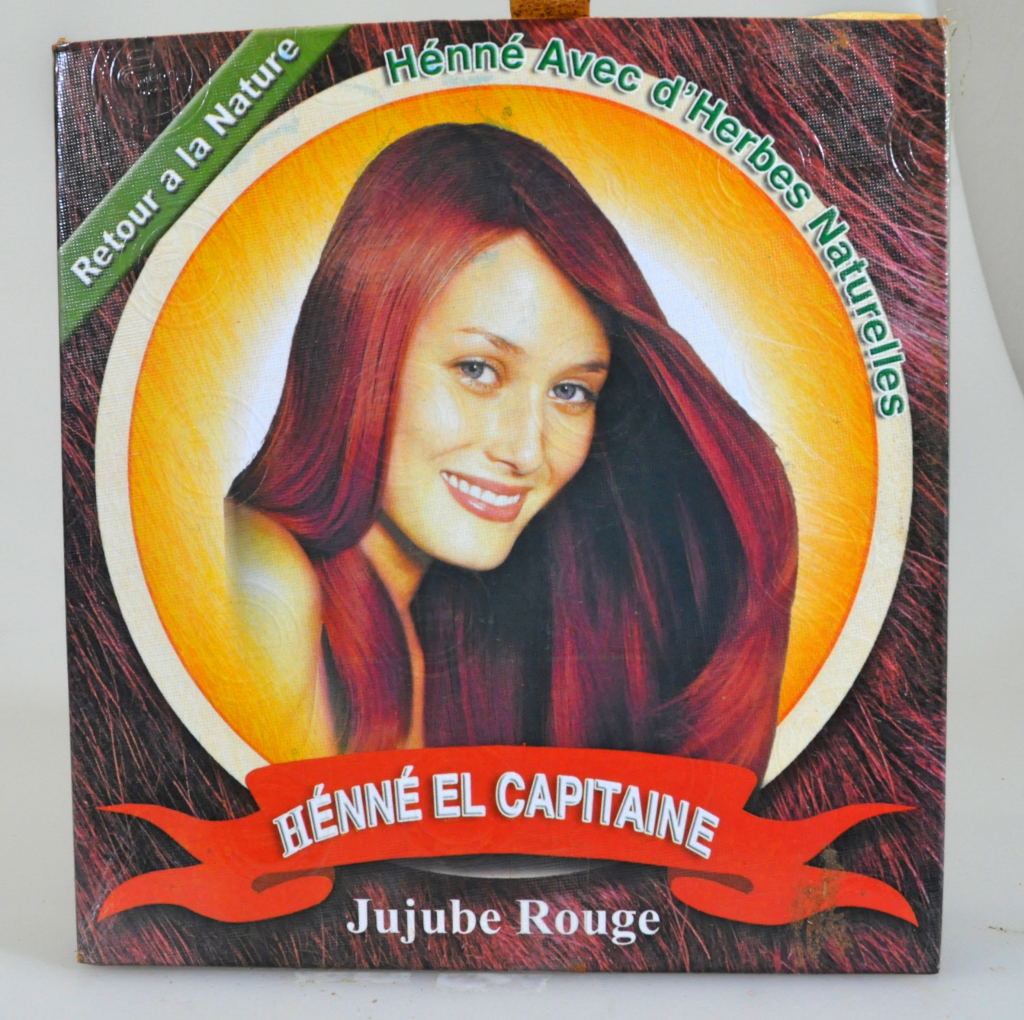
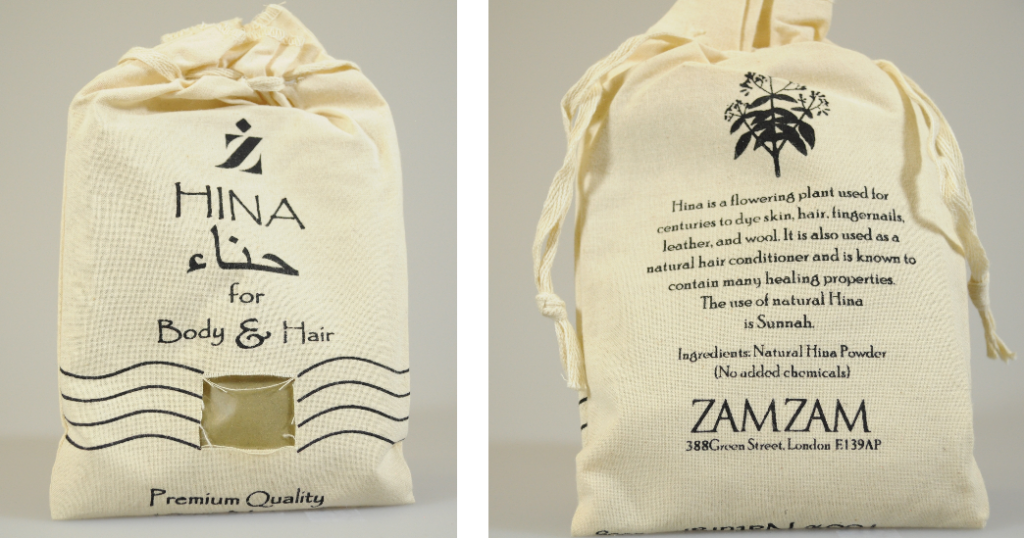
Below are images of the labels for the nine samples. Beyond this section, each sample will be referred to as its corresponding number. They will be tested alongside Ancient Sunrise® Rajasthani Twilight henna powder, which will be referred to as “AS”.
Sample #1
Theproduct claims to be 100% natural. The ingredients are reported as“100% Natural Henna Powder.” The product also claims to beorganic.
Thisproduct fits into criterion 1. There is no information suggestingthere are other ingredients other than henna. The label would leadthe everyday consumer to assume that the contents of the packagingare pure, natural henna powder.
However,descriptions on sitesselling this product claim a “Beautifulgolden brown color” which is inconsistent with results expectedfrom pure henna. This would suggest either 1) The product is not whatit claims to be or 2) Poor quality product and/or poor instructionslead to a lighter result.
Instructionsare included on the back of the packaging. On the side of the box, itstates that this is a product of India.
Sample #2
Thisproduct fits both criteria 1 and 3, as it claims to be 100% naturalhenna powder, and also reports a red result in addition to showingmultiple images of red hair on the packaging.
Noinstructions were provided. The label includes an address of animport company. The website listed does not exist. Someadditional searching found that the company has a contract with amanufacturing and export company in Pakistan, and that this is onetype of product they export, along with clothing and gift items.
Sample #3
Whilethe front of this package claims it is 100% natural henna, and statesthat the shade is copper, the back is unclear. It says “Copper: fordark blond, light brown hair,” which most likely means that darkblonde or light brown hair may be colored to a copper color. It alsomentions “neutral henna” which suggests that it contains cassiaobovata. However, on the website, the only ingredient listed for thisproduct is “Lawsonia inermis (henna) leaf extract.” Based on thereported ingredients, this product fits criterion 1 as a product thatclaims to be pure henna.
Apamphlet included in the box provides instructions which recommendmixing the paste with hot water and applying once the mixture hascooled.
Whilethe packaging says that the product is made in France, there is noindication of the origin of the henna powder. If it does containhenna, it is most likely mixed and/or assembled in France withingredients imported from elsewhere.
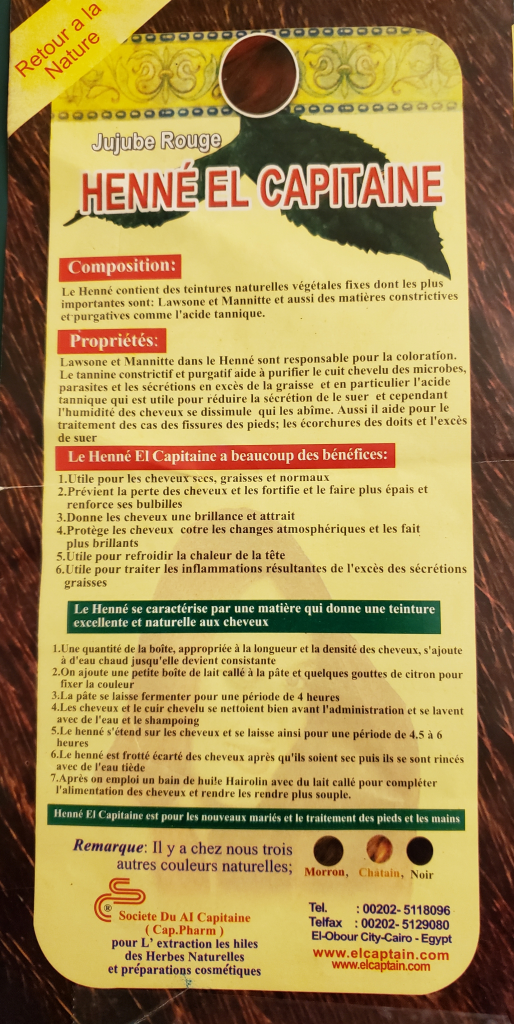
Sample #4
Thisproduct claims to contain henna under the insert’s first section,“Composition.” It claims to provide a deep red result. However,the description is confusing, as it states that lawsone and“mannitte” are responsible for coloring. If mannite is to beunderstood as the sugar alcohol, mannitol, it would not affect color.
Theproduct claims to be “Henna with natural herbs,” but theseadditional ingredients are not reported anywhere. In thechromatography section, it will become clear that this productclearly contains more than just henna powder.
Thisproduct includes instructions on the insert, and is a product ofEgypt.
Sample #5
Thisproduct’s label includes something close to an ingredients list, asit reports henna powder along with additional herbs which are meantto affect the color result as well as to condition the hair.
Thisproduct fits criterion 2. There is no indication of color result,other than stating that the blend of herbs and henna “give the darkcolor”. In fact, the label states “It does not contain any colouror dye.” This may be intended to mean that the product does notcontain any synthetic dyes. If the product does contain henna, itwould color light hair a red tone. None of the additional herbslisted are ones which produce a dye, but some plant powders canaffect the tone of hennaed hair. This is most likely what thepackaging means to suggest.
Theinstructions recommend mixing the product with water in an “ironvessel”* and letting it sit for to hours. If the product doescontain amla powder, it may be enough to create an acidic mix.
Theproduct was manufactured in India.
*Aniron dye pot can beeffective at decreasingthe vibrancy of dyecolors in a boiling pot to dye yarn or cloth, but will not change theresult of henna on hair. The iron pot may cause the dyereleased paste surface to look browner, but there is no significanteffect on the hair.
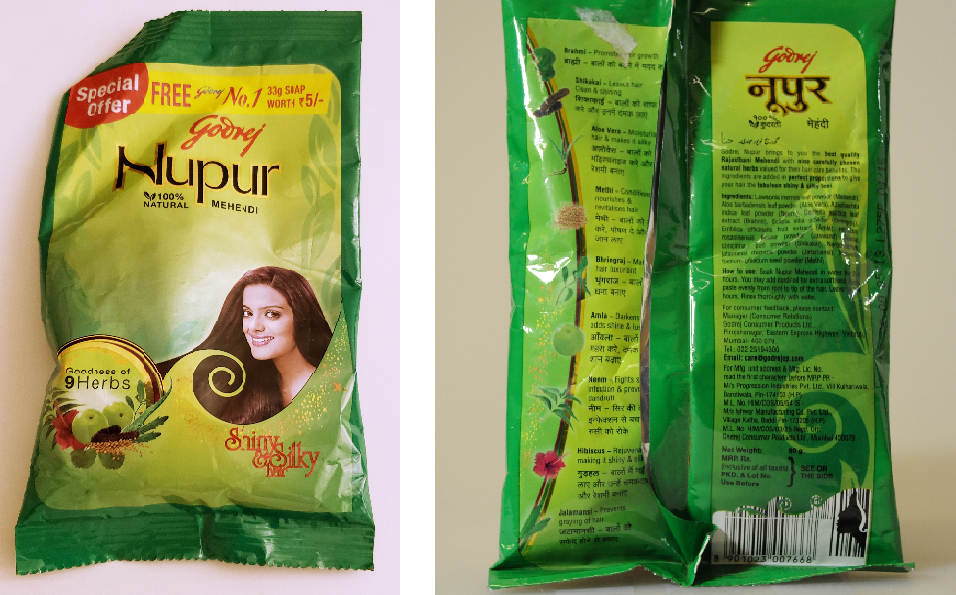
Sample #6
Thisproduct, like #5, is labeled as a henna and herbal mix forconditioning hair, but does not explicitly state a color result. Onthe product’s site, it is described as providing a “rich burgundyshade.”
Thefront of the packaging includes the words “100% natural” and“Mehendi,” another term for henna. It is unclear whether thisshould be read as two phrases or one, as the from also clearly statesthat there are nine additional herbs. The back of the packagedescribes supposed benefits of the added herbs. The phrase“Rajasthani Mehendi” means that the henna in this product is fromthe Rajasthan region of India, which is where much of the world’shenna, including Ancient Sunrise®henna, is grown.
Theingredients list states that henna powder is the first ingredient,followed by powder forms of the following: aloe, neem, brahmi,bhringraj, amla, hibiscus flower, shikakai, jatamansi, and methi. Allof these ingredients are commonly known and sold in South Asianstores as health and beauty herbs.
Thisproduct has instructions on the back of the packaging. It recommendsmixing the powder with water and letting it sit for 2-3 hours. Likesample #5, it is possible that some of the added herbs are acidicenough that water would be enough. It also suggests adding oil orcurd for “extra softness.” Doing so would affect the dye uptake,leading to lighter results. To learn more about what not to add tohenna mixes, read Hennafor Hair 101: Don’t Put Food On Your Head.
It isfrom India, and is a very popular “henna for hair” product bothin South Asia and in the States, and is widely available online andin international grocery stores.
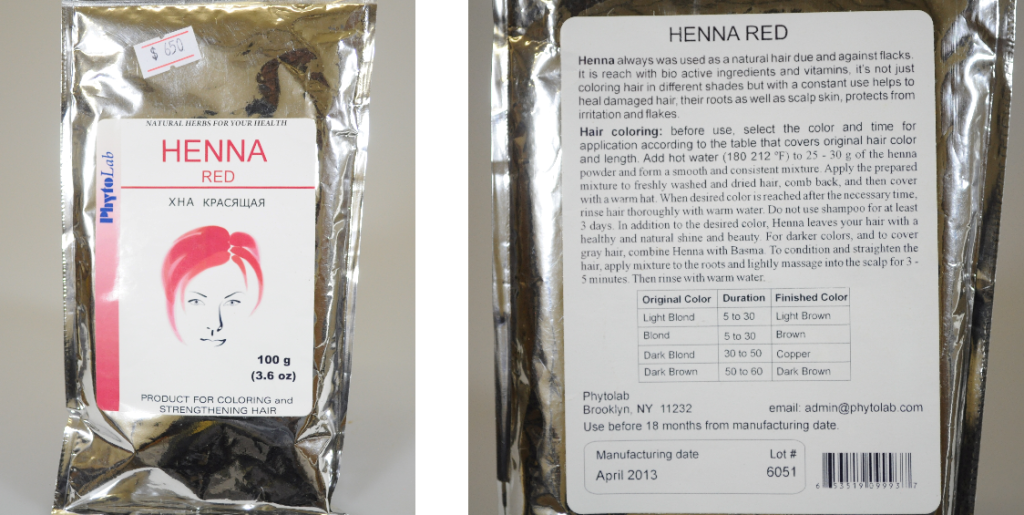
Sample #7
Thisproduct claims to contain henna. The brand’s websitedescribes it as a 100% natural product. The site also sells “hennaneutral” (cassia powder) and “henna black/basma” (indigopowder), which would suggest that their “henna red” is theirhenna (lawsonia inermis) powder. Therefore, this product seems to fitcriterion 1, a product is labeled/advertised as a 100% pure hennapowder product, but it is not entirely clear due to a lack ofingredient declaration.
However,the table on the back seems inconsistent with true henna results, asthey suggest that, one would see some variation of brunette or copperresults. Like sample #1, it is possible that this is either due tothe product containing additional ingredients, or ineffectivemixing/application methods.
I willstill include this product in within this group of samples because itis both labeled as henna, includes the word “red,” and thewebsite claims it is a 100% natural product.
Thereis a US address on the back, but no indication of where the henna wasgrown.
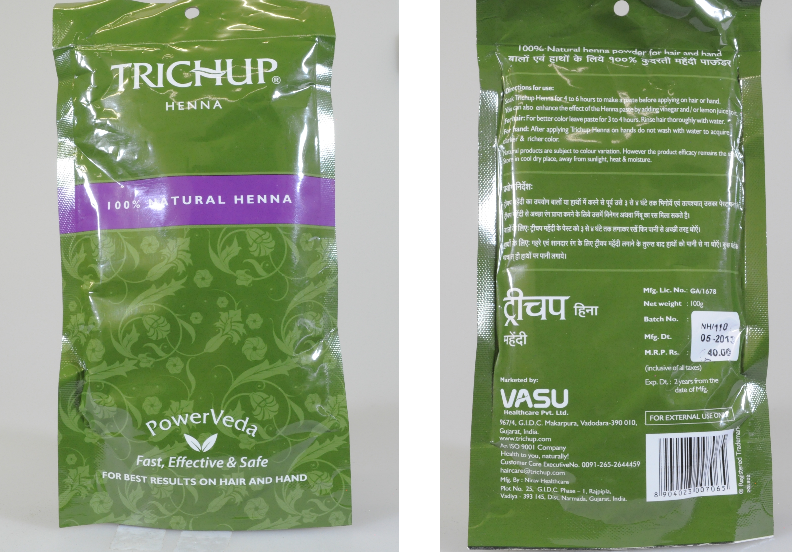
Sample #8
Thisproduct fits criterion 1 as it claims to be 100% natural henna. Itincludes instructions on the back of the packaging. The brand’swebsite appears to sell additional hair care products such asshampoos, conditioners, and oils. The product has an Indian addresson its packaging.
Sample #9
This product qualifies for criterion 1 as a product that claims to be pure henna powder. The information made available on this packaging is minimal. It states that it contains natural “hina” (henna) powder with no added chemicals, and that henna has been used as a dye for centuries. There are no instructions. The address listed is in London, UK, but the source of the henna is not listed. An internet search found that this brand, like sample #2, is part of an international exporting company that sells a variety of items such as health product, gifts, and books. It specializes in Islamic items.
Powder and Paste Qualities
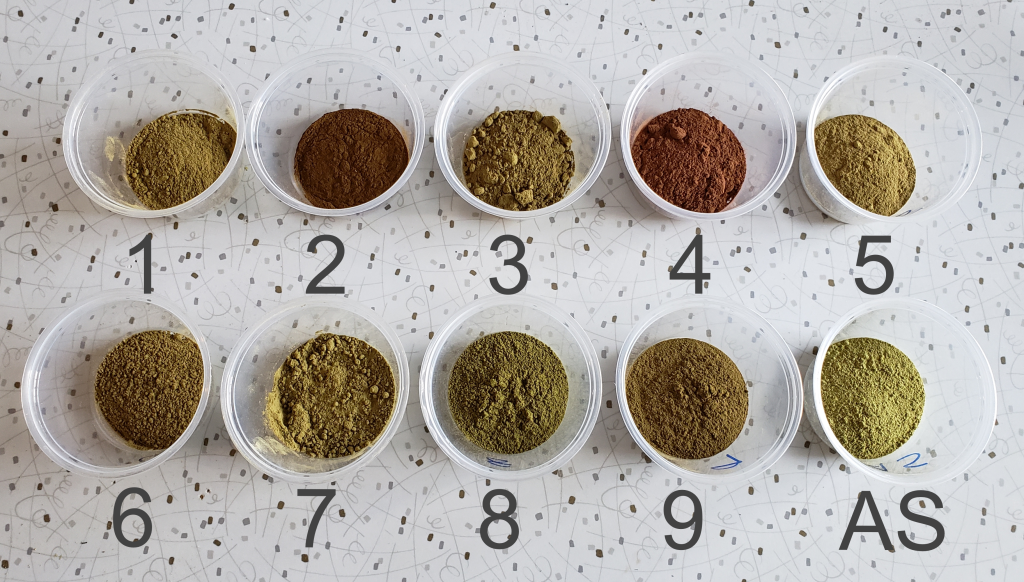
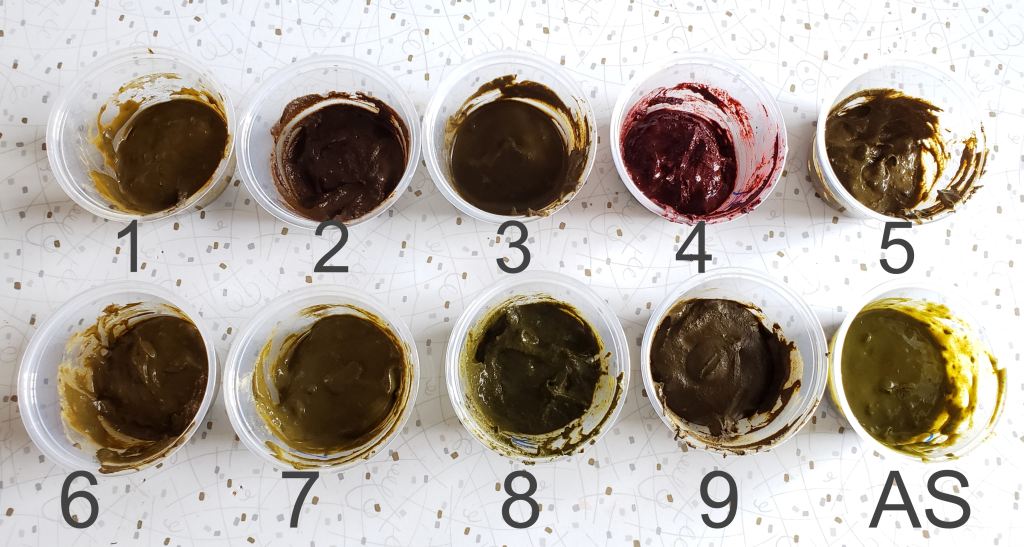
Therewas a wide variation in powder sift, texture, and scent among thesamples. When mixed with liquid, the resulting pastes also varied inqualities.
AncientSunrise®henna is grown in the Rajasthan region of India and is finely sifted.Many of the Rajasthani hennas have a slimy, stringy texture when madeinto a paste. This is because henna plants will have more or lessnatural mucilage depending on the cultivar (variety of plant). Notall hennas have this texture, and some are naturally more creamy.Pakistani henna tends to have less mucilage and a greater coefficientof expansion. The higher coeffient of expansion and lower mucilageleads to paste cracking when henna is used as body art; it does notmake any difference in hair application.
Itcould be assumed that hennas manufactured in a country were alsogrown there, unless the address is outside of where henna isnaturally grown, such as those products with company addresses inEurope or the United States. In the case of the latter, it notpossible to determine the origin of the henna. More information onthis textural quality of henna pastes can be found on page 23 and 24of ChapterFour: Henna Science and Microscopy from the AncientSunrise free E-book.
Qualityhenna powder should not be gritty, chunky, or contain visible piecesof plant leaf and/or stem. Henna should not bubble or turn frothywhen mixed with liquid. Some other plant powders which containsaponins, such as Zizyphus, do froth. Bubbles may also indicate somereaction between the acidic liquid and an unknown ingredient in thepowder.
Purehenna has a neutral, plant-like odor similar to dried straw or hay.It does not smell floral or spicy; it smells like leaves. Pure hennapowder does not have a perfumed, pine, camphor, or eucalyptus scent.Henna powders can vary in color from light green to olive green.While color can be indicative of the powder’s freshness andquality, it is not always the case. Powders can be made greener byadding dyes.
For products labeledas henna for use on hair, the FDA has the following specifications:
“It shall not contain more than 10 percent of plant material from Lawsonia alba Lam. (Lawsonia inermis L.) other than the leaf and petiole, and shall be free from admixture with material from any other species of plant.
Moisture, not more than 10 percent.
Total ash, not more than 15 percent.
Acid-insoluble ash, not more than 5 percent.
Lead (as Pb), not more than 20 parts per million.
Arsenic (as As), not more than 3 parts per million.”
Inother words, a product labeled as henna needs to be made from theleaf or petiole (leaf stalk) of the plant rather than the bark,roots, or any other part. It should be a dry good. It should containno more than 15 percent inorganic filler, or ash.This can include substances such as sand and metallic salts. “Freefrom admixture with material from any other species of plant” meansthat products containing henna mixed with other herbs or plantmaterials are illegal to enter the United States. Several of theproducts selected for this article are labeled as herb mixes. Others,while labeled as pure henna, smell like additional herbs wereincluded but not reported on the labeling or ingredients.
Pleasenote that even if a henna product conforms to FDA standards, thisdoes not necessarily make it a quality product. This list is simplythe minimum for what the FDA considers an acceptably safe product forsale and use within the United States. A product labeled as henna forhair could be roughly ground henna leaves with 15% sand and still belegal. It is also important to mention that this article does not aimto determine the legality or safety of any of the products tested.This article serves only to report on observable physical qualitiesand on the presence of dyes in each product.
Below are the observations on each sample.
#1.This product was labeled as 100% natural, organic henna powder. Noother ingredients were reported. The color was not of any concern.However, there was a faint herbal scent that suggested additionalplant powders were added, most likely one or more of those commonlyfound in henna herbal mixes, such as shikakai, neem and so forth. Thesift was fine. When mixed into a paste, the consistency wasacceptable; its a slimy, gel-like texture was similar to Rajasthanihennas, such as the AS sample. This makes sense, given that productwas from India.
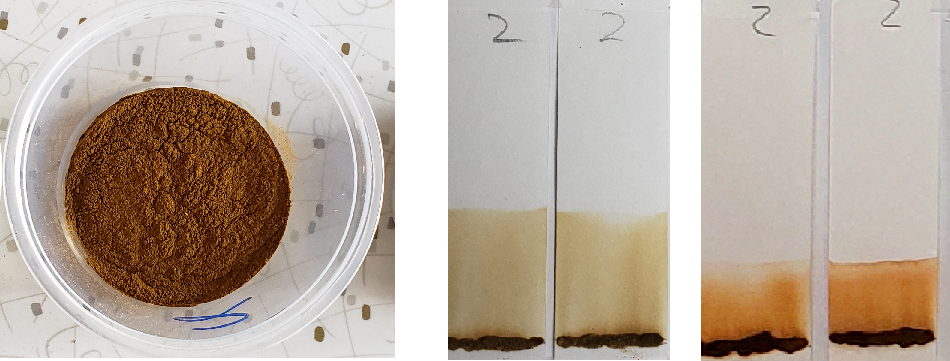
#2.This product also claimed to be pure henna. However, there was a verynoticeable herbal scent. The color of the powder was much deeper thana henna powder should be, almost like the color of nutmeg powder.Larger particles in the powder suggested a low sift. When mixed intoa paste, the product frothed slightly and had a gritty consistency.The paste also showed a darker color than would be normal for a hennapaste that had just been mixed. Shikakaipowder has a red tone and herbal scent, lathers slightly whenmixed. This may explain the qualities in found with this product, butwould mean that the product is definitely not pure henna.
#3 Theproduct claimed to be pure henna. There was nothing out of theordinary about the color or texture of this product. Some of thepowder formed soft lumps which could be broken with light pressure.There was no discernible scent beyond a normal plant-like scent. Thecolor was acceptable for henna powder. The paste consistency wasthinner and runnier than the others, despite all powders being mixedwith the same amount of liquid.
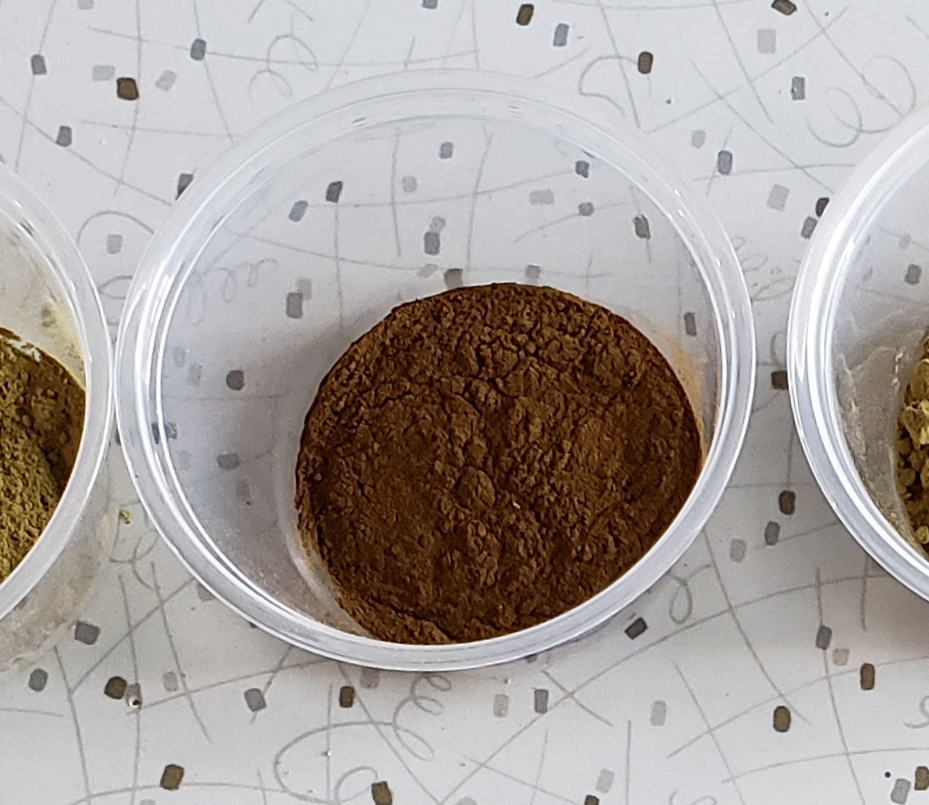
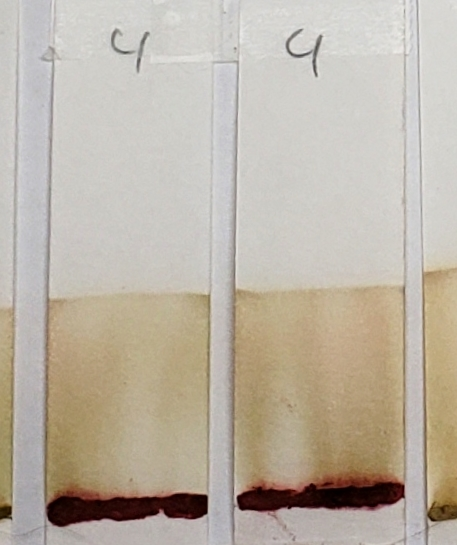
#4. The product was labeled as “henna with natural herbs.” There wasa very strong herbal scent of something other than henna. The powderwas a vivid, brick red, and did smell like the other “herbalhennas” and like samples #1 and #2. The powder had large plantparticulate matter and long, thin pieces of plant fiber. When liquidwas added, the liquid itself immediately turned blood red even priorto mixing. The paste, after mixing, was blood red. This suggests thatthe product contains a water-soluble red dye. The paste texture wasmuch grittier than a normal henna paste should be. Shikakai would notbe a sufficient explanation for the color of this powder becausewhile it has a red color, shikakai does not produce a dye.
#5.This product was labeled as henna with added herbs. The scent matchedthis. The powder showed large stem and/or leaf fiber particles whichwere easily visible to the naked eye. The paste consistency reflectedthis lower level of sift. There was a slight sliminess to the paste;if better sifted, the product may have produced a paste similar to aRajasthani henna. The light green-brown color of the powder and pastewas similar to how a henna product should appear.
#6.This product, like #5, was labeled as an herbal henna. Both hadsimilar added herbs reported on their packaging. The product wasbetter sifted than #5, but some plant particulates were visible. Thepowder had an herbal scent. The paste showed more of the shiny, slimymucilage texture than #5, but not as much as can be seen in the ASsample. This would match the packaging’s statement that the hennawas from the Rajasthan region of India. The powder and paste colorswere a light green-brown consistent with natural henna products.
#7.This product was the “red henna” product of three sold by thecompany: Red (henna), Neutral (cassia), and Black (indigo). One mightassume that the products are sold for the purpose of mixing, muchlike Ancient Sunrise plant dye powders, but it is not clear. Thepowder was of a light green color with pieces of plant fiber visible.The powder had an odor consistent with henna, but the product frothedwhen mixed with liquid. The paste was quite gritty.
#8.This product was labeled as 100% natural henna. The color was of alight greenish straw tone, along the lines of a standard henna powdercolor. In color, it was the sample most similar to the AS sample.When mixed with liquid, the resulting paste was noticeable gritty,but with some mucilage. There was no herbal scent.
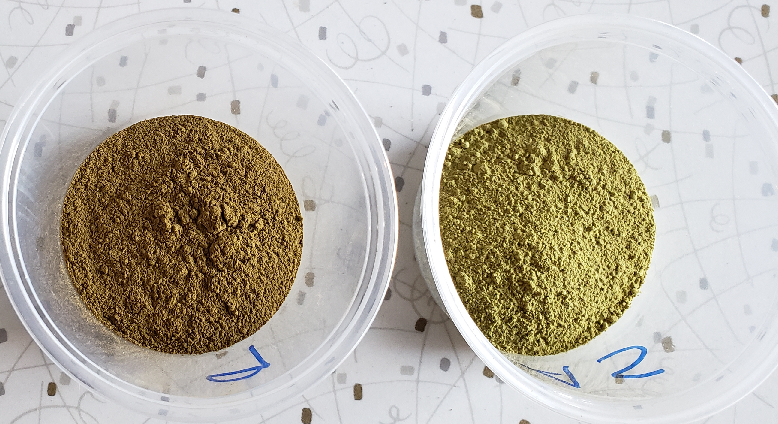
#9. Theproduct was also labeled as 100% natural henna. The color of thepowder was deeper than what might be accepted from a henna powder,almost a muddy green. The powder appeared fairly well sifted, withsome very thin, long plant fibers visible. The paste was fairlysmooth but not slimy, and a mid-brown color. There was no herbalodor.
AS.This powder is finely sifted, soft to the touch, and a pale greencolor. No large leaf or stem pieces or fibers as visible. There is afaint dried-hay scent. The paste was a clay-green color had a smooth,slimy texture. In fact, in comparison the other samples, this sampletook more focus to apply the paste to paper chromatography stripsbecause of its mucous-like texture.
Chromatography
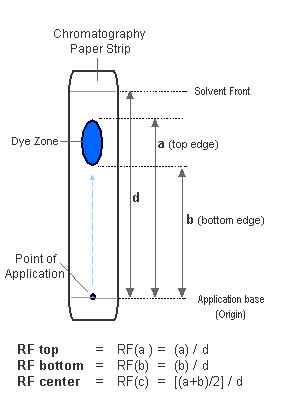
Paper chromatographyis a simple method used to separate dyes in order to determine thepresence of one or more dyes. The method involves placing a smallsample of a substance onto a thin strip of absorbent paper, thenhanging the strip so the end of it is just below the surface of aliquid solvent.
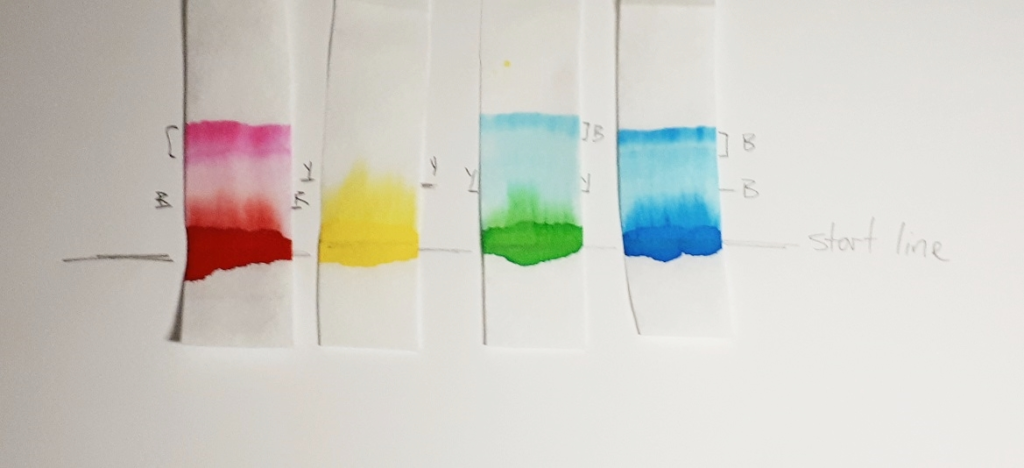
As the solvent travels up the strip, dyes move along with it. Dyes which differ in chemical structure will move at different rates before stopping. The result is that each individual dye will create its own mark at a certain place between the point of application and the solvent front (the highest point that the solvent reaches). Multiple dyes will show as multiple marks.
Below is the result of a paper chromatography test done on store-bought food coloring. One can see that the green dye is a combination of yellow and blue dyes, which were separated through the chromatography process.
One drawback of thesimpler paper chromatography method is that it alone cannot identifythe dye in each sample unless the target dye is already known.Because Ancient Sunrise henna powders are tested by an independentlab, it can be assumed that the only dye present is lawsone, whichwill show a dye band distinct from other dyes’ banding. If aproduct results in one or more bands that appear different fromlawsone, it can be assumed that other dyes are present.
It was necessary to test each product under multiple conditions to achieve as full a picture as possible. Because the target dyes involved were unknown, it was not possible to test for specific dyes. Instead, each sample was tested multiple times. Depending on the nature of the solvent used, different dye bands were more or less visible on the results.
ChromatographyProcess
Unlikechromatography tests in which the target dye is known, here we arelooking for the presence of dyes, whatever they may be. While we wantto see the presence of lawsone, we also want to see what else may bethere. “Henna” products may contain a wide variety of unknowndyes, some of which react to some solvents but not others. While adye may show up on one type of test, it may not at all in another.Therefore, multiple solvents and solvent strengths should be used.
Pre-trial tests were conducted to determine which solvents and solvent strengths yielded the most useful results. Solvent type and strength also affected how long the sample strips were left in the tank before being removed. Leaving samples in the tank too long can risk dyes being “bleached out” by the solvents so that results became unclear. Pre-trial tests helped to determine the best processing times.
The most conclusiveresults came from sampling the pastes with the following solvents,strengths, and times:
1. 99% isopropyl alcohol for 20 minutes
2. 1:1 mixture of isopropyl alcohol and distilled water for 15 minutes
3. 1:1 mixture of acetone and distilled water for 15 minutes
It was found that100% acetone moved so quickly up the paper strips that no usefulresults were obtained. Therefore, samples on 100% acetone will not bereported in this article.
First, each productwas made into a paste following classic henna dye-release methods,which will be described in more detail below. In addition, to accountfor the possibility of time and acidity breaking down any non-lawsonedyes, each product was tested again by mixing each powder with onlydistilled water and testing immediately.
Below are the methods and results of each set.
Set 1: DyeReleased Paste Samples
The LawsoneMolecule in Henna
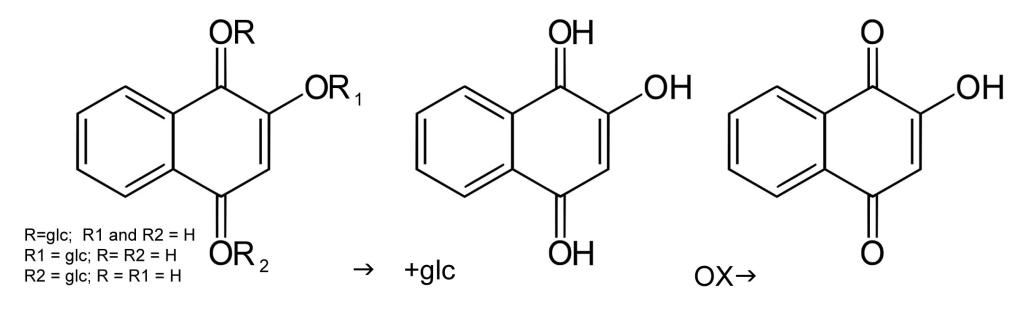
The molecule responsible for the orange/red color achieved by henna is called lawsone. In the henna plant, lawsone precursors exist. When the plant powder is mixed with a mildly acidic mix, the precursors are released as intermediary aglycone molecules in the process that is commonly known as dye release. Aglycones can release in a water-only mixture as well but will oxidize to their final stable state very quickly. The additional hydrogen atoms present in acidic liquid allow the aglycones to stay in their intermediate state longer so that the dye can release more fully before it is applied to the hair. Lawsone in its final state is oxidized and unable to bond to keratin.
The process of oxidation is what gives henna its final color. This is why hair is often lighter and brighter initially after rinsing henna. The color deepens over the course of subsequent days. When the dye molecules in henna paste oxidize before bonding to keratin, this is called demise. This is why pure lawsone on its own is useless as a hair dye.
In a mildly acidic liquid, the lawsone precursor (center) is maintained so that it can attach to keratin, after which it oxidizes to its final state (right).
Mixing and DyeRelease
Each powder samplewas mixed with a prepared solution of distilled water and lemonjuice. Lemon juice was added to distilled water until the solutionshowed a pH of roughly 5.5, as indicated on a litmus strip. Theresulting solution was 10 parts distilled water to 1 part lemonjuice, or 100ml distilled water and 10ml lemon juice.
Five grams of eachpowder sample was mixed with the acidic solution to form a paste. Theacidic solution was added first to the AS sample to determine anappropriate ratio for creating a paste similar to one that would beused for coloring hair. Thus, the result was 15ml acidic solution foreach 5g powder sample*. All prepared pastes were kept in air-tightdark glass jars to prevent excess exposure to oxygen and light.Starting from the moment the final paste was mixed and sealed, allsamples were left at 65 degrees Fahrenheit for 12.5 hours for dyerelease.
*Due to each powder sample varying in particle sift, some pastes were thinner or thicker than others. The variation in paste viscosity may have been a slight factor in test results, but not in any way that could lead to false results.
Set 1 Process
After dye release, a small amount of each sample was applied to paper chromatography strips 0.5 inches from the base of each strip. When not being used, all samples were kept refrigerated at approximately 37-40 degrees Fahrenheit. All samples were tested within 48 hours of dye release. Strips were hung in a glass chromatography tank containing a selected solvent so that the bottom edge of the strips sat just under the surface of the solvent. A glass plate was placed over the top of the tank to reduce airflow. After the determined time, the strips were removed and analyzed.
Below is a short time-lapse video showing how the sample traveled with the solvent. This particular set shows one paper strip for each sample and five strips at a time. One minute of real time is translated to one second of time in the video.
Results
These images showresults comparing all paste samples across solvents and times.Samples are all tested numerous times, but for the sake of visualreporting, one or two paper strips of each sample for each test werechosen based on which were the most representative of the group.Outliers were those whose results appeared least like the others,most likely due to an odd variation in the paper strip causinginconsistent solvent wicking. These were disregarded. The remaindersshowed consistent results with little variation.
99% Isopropyl Alcohol for 20 Minutes
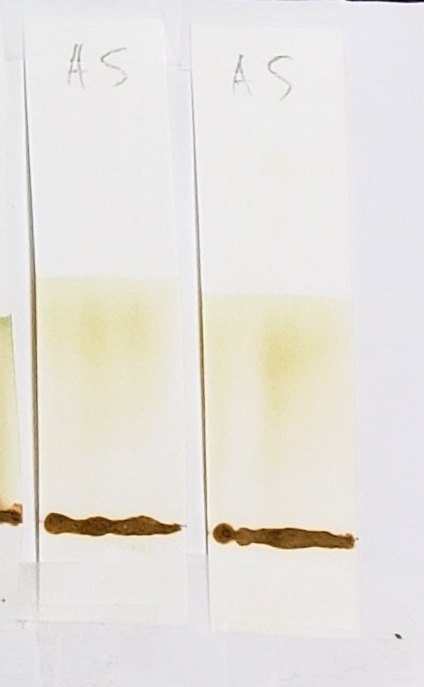
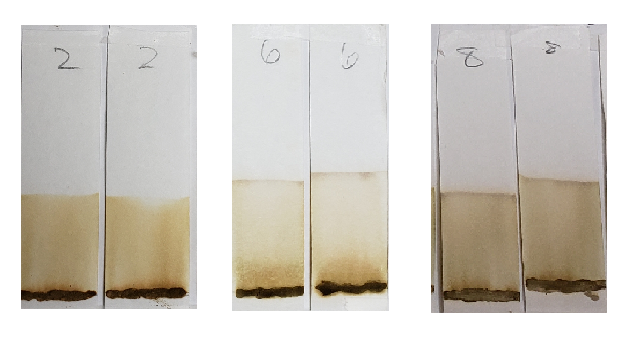
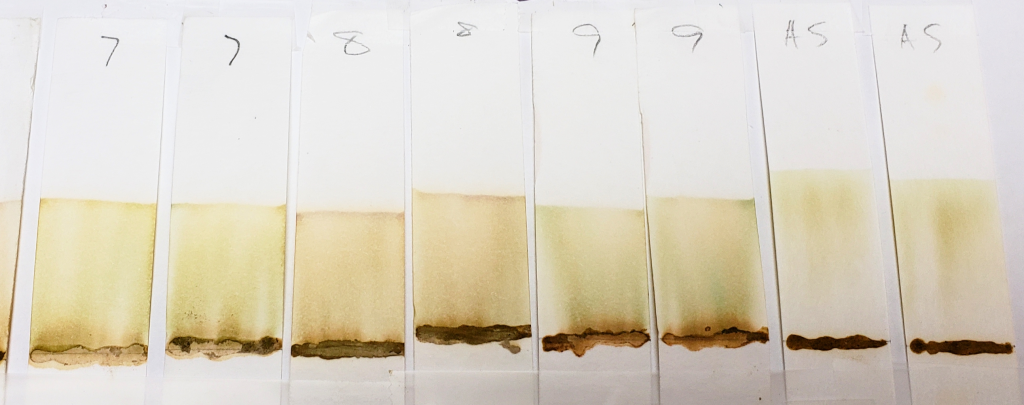
One can see that allof these strips show mostly pale dyes that range from green to orangeto light brown, and that few show clear dye bands below the solventfront. In the world of chromatography, most of these would not beusable results. However, for our purposes, they are interesting. Thisis because we know that lawsone does not show much color in itsintermediate aglycone state. The presence of water can causeoxidation of the aglycone to its stable final form. So, when using ananhydrous solvent, it would be expected that the dye does not turn upbright orange. If it does, it might suggest that final-state(oxidized) lawsone was present in the product, or that an orange dyeother than lawsone was added to the product.
If you are familiarwith the process of coloring your hair with henna, you will know thatthe final color result takes a few days to mature. The lawsonemolecule exists in a precursor state called an aglycone when it ismixed in an acidic paste and allowed to dye release. As long as thepaste is not exposed to oxygen, and if it is not left to demise, mostof these molecules remain aglycones. It is through the process ofbonding to the keratin in your hair, and to the oxygen molecules inthe air that they become stable lawsone molecules, and you see thedeeper color. This is also why henna paste applied to the skin isleft for several hours, and the design deepens over the followingdays.
BUT, if a lower quality henna powder is “fixed” with added lawsone, that lawsone would be the stable-molecule type. This is sometimes done by henna sellers to make the product appear to have a higher lawsone content, or as an attempt to make the product more effective. Manufacturers and distributors who do not have a solid understanding of the chemistry of henna do not realize that adding lawsone will do nothing to the efficacy of the product. Stable lawsone will not bind to the hair because it has lost the hydrogens necessary to create a bond. Only the aglycone lawsone molecules released from henna powder by an acidic liquid have the ability to bind to keratin.
One can see that outof all of the other samples, AS (shown above) is one of the palest,nearly a yellow-green color, and almost seems to form a band belowthe solvent front. Virtually no dye remains near the applicationpoint. This indicates two things: first, that there was little to nooxidized lawsone in the paste sample. Second, the fact that the blockof space between the paste application line and the solvent front isso “clean” suggests that there is only one type of dye at onepoint of chemical state. We know that this dye is lawsone in anaglycone state. The more dyes involved, the muddier the strip mayappear, as it will show evidence of several observable dyes, or dyesin several molecular states. In fact, even a product that contains anothing else but a blend of several different hennas would mostlikely show variation due to those dyes being just slightly differentfrom each other.
Samples such as #2, 6, and 8 are more orange, and also show darker bands right above the sample application sites. The muddy brown band is very prominent in #6. In fact, all samples except for AS showed some level of banding that hugged the paste sample when tested with 99% isopropyl alcohol. This happens when there is a dye present which does not move well with the selected solvent and which prefers to stay low with the sample. Lack of dye movement in itself is not necessarily bad, and is simply indicative of the relationship between the dye and the solvent; however, because we can see that this did not happen with the AS sample, we can guess that those other powders contained something that AS did not.
Closeups of samples #2, #6, and #8.
Both #2 and #6 are particularly orange, which again suggests the presence of either added lawsone or another dye that comes up orange under these conditions. If we revisit the image of those powders prior to mixing, sample #2 especially is of a darker color. #6 and #8 are lighter, but still border on what would be a normal color for henna powder. It is possible that these three products have added lawsone or another orange dye.
#4 is very interesting, and will continue to be interesting as we go along. There is very clearly the presence of a red dye that is not lawsone. It is a vivid red which appears just above the application point. If you revisit the earlier sections of this article which show the powders and pastes, #4 is a vivid red color as both powder and paste.
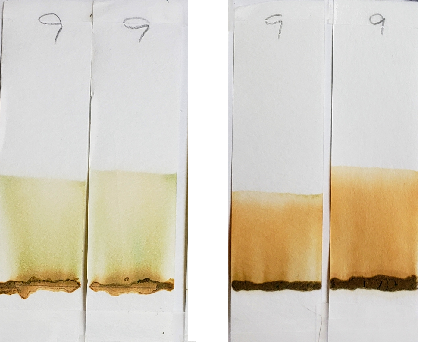
#9 shows thepresence of a green-blue dye which appears as faint streaks closer tothe base of the strips. The solvent front also shows the same colornear the edges. In addition, there is a deeper, brown band that staysjust above the application point.
#7 also shows a faint green tint similar to #9, but there are no noticeable blue-green bands. Some green tones can be expected due to the presence of chlorophyll in the plant powders. Therefore, a green color does not guarantee the presence of an added dye. However, the blue-green streaks present in sample #9 are not consistent with chlorophyll.
1:1 Dilutions for 15 Minutes
In comparison, dyebands were more visible when pastes were tested with equal partssolvent and distilled water. This is because water causes the lawsonedye to oxidize, turning the dye a deeper orange. In fact, the dyestained the paper strip as it moved upward with the solvent.
Water alone was not an effective solvent because the dye did not travel with it quickly enough. Pure solvent, on the other hand, pulled the dye too quickly, leaving little to no banding, as was shown by the 99% isopropyl alcohol set. By combining distilled water and solvent, both dye oxidation and dye movement was achieved in a way that showed visible dye bands.
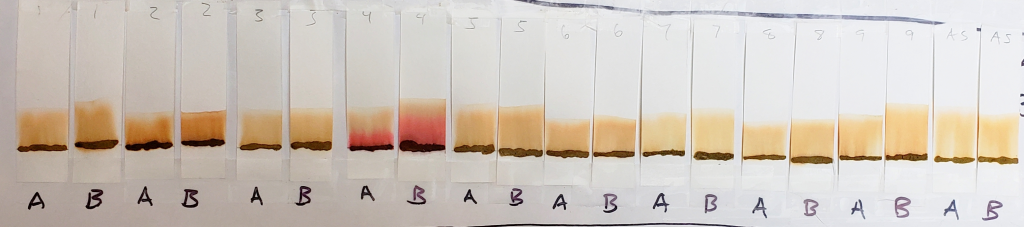
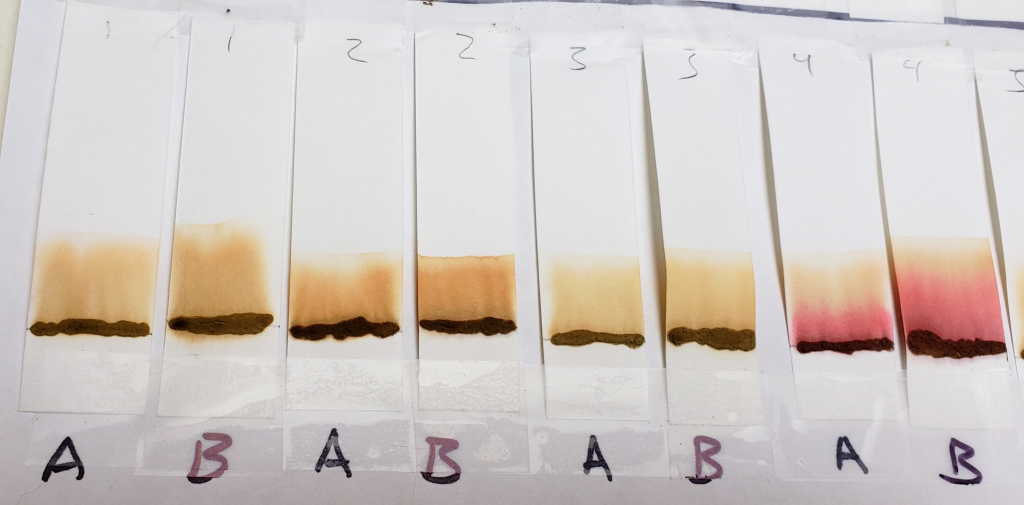
In the image above,A and B labels indicate results for 1:1 isopropyl alcohol/water and1:1 acetone/water respectively. Both were left in the tank for 15minutes. Results were generally similar for both solvent dilutions.
In comparison to99% isopropyl alcohol, results from 1:1 dilutions were deeper orangewith dye bands visible on most samples. While they are still faint,the banding for lawsone can be seen as stripes of deeper color justbelow the solvent front.
One can see thatthe AS sample remained relatively pale, and that the dye seemed tomove more cleanly away from the application line, leaving lighterstreaks where little or no dye stained the paper.
Sample #4 clearlyshows the presence of a red dye along with lawsone. There is a brightred band that stays near the application line. The band moved higherin the 1:1 acetone/water sample, but both tests show separate red andorange bands.
Sample #2 shows asignificantly darker dye which creates a nearly solid stain fromapplication line to solvent front. There is a band near the top whichcould be lawsone. If you look closely, there is a slightly deeperorange band that stays near the application line. This suggests thatthere may be an additional orange dye along with lawsone. Sample #1also shows a darker color in comparison to other samples, which maysuggest the presence of additional dyes.
Another notable detail is the color of the paste samples at the application line after processing. Many are bleached out as the solvent pulls the dye from the sample. The AS application line is the palest. Samples #2 and #4, however, remained very dark. This is another reason to believe that additional dyes besides lawsone were present.
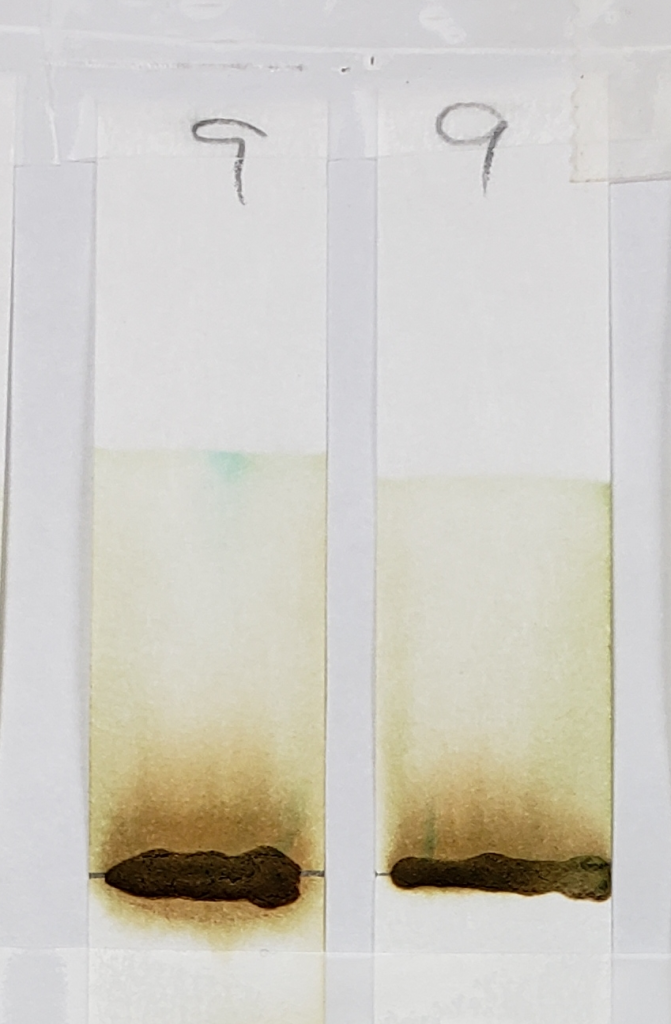
Sample #9, which show blue-green dye streaks when processed with 99% isopropyl alcohol, changed significantly when processed with 1:1 dilutions. Most likely the faint blue-green dye was overpowered by the orange stain.
Top: Sample #9 Tested with 99% isopropyl alcohol. A blue-green dye is visible. Bottom: Sample #9 tested with 1:1 isopropyl alcohol/water and 1:1 acetone and water respectively. The blue-green dye is no longer visible.
Set 2: Powder andWater Samples
It is important tonote that all samples were treated as if they were 100% pure hennapowder– that they contained no additional dyes or acids, and thatthey would require an acidic solution and dye release time. This wasdone to keep results consistent.
However, there wasthe possibility that added water-soluble dyes were present whichcould have been broken down by the acidic solution, or by sitting toolong after mixing. Thus, the same process was repeated with pastesamples made from just distilled water. These samples were testedimmediately after mixing, with no wait time.
Theoretically, thisset would show very little lawsone especially in the 99% isopropylalcohol condition, as the henna would not have had much chance torelease lawsone in its aglycone precursor state. The 1:1 dilutionsmay still provide an environment for a fast release/oxidation oflawsone, but some additional dyes may be better seen than in Set 1,if they were affected by the acidity and/or 12 hour wait.
For each sample, 1gpowder was mixed with 3ml distilled water. The paste was stirreduntil a uniform consistency was achieved, then a small amount wasimmediately applied to paper chromatography strips and tested withthe same solvents and times as Set 1. To repeat, the conditions wereas follows:
1. 99% isopropyl alcohol for 20 minutes
2. 1:1 mixture of isopropyl alcohol and distilled water for 15 minutes
3. 1:1 mixture of acetone and distilled water for 15 minutes
New paste was made for each solvent condition so that each sample was tested immediately after mixing with water.
Results
99% Isopropyl Alcohol for 20 Minutes
Results for powder-and-water samples immediately tested with 99% isopropyl alcohol.
The image above shows results for powders mixed with distilled water only and immediately tested in 99% isopropyl alcohol. Unlike the results of dye-released pastes tested with 99% isopropyl alcohol, samples mixed with only water showed consistent bands rising to just above the application point. Less dye traveled upward with the solvent, leaving paler tones near the solvent front. Below is the image for dye-released pastes tested with 99% isopropyl alcohol for comparison.
Notable results forthis set are those of samples #2, #4, and #9.
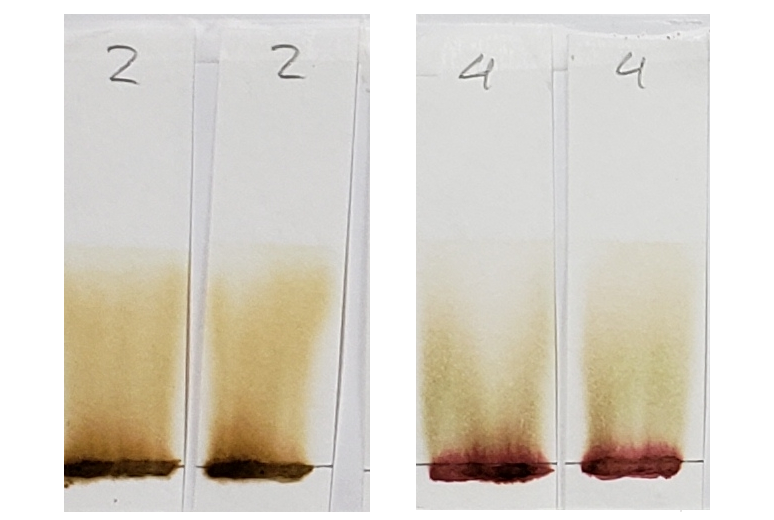
Sample #2 appearsmore vividly orange than all other samples. This occurs in both thedye-released set and the water-only set. There is strong evidence foran added orange colored dye, lawsone or otherwise.
Sample #4 shows the same red dye that has been apparent in all tests. Because more red dye traveled with the solvent in the water-only set in comparison to the dye-released set, this is most likely a dye which is affected by pH and/or time.
Left: Sample #2 mixed with water and tested in 99% isopropyl alcohol. Right: Sample #4 mixed with water and tested in 99% isopropyl alcohol.
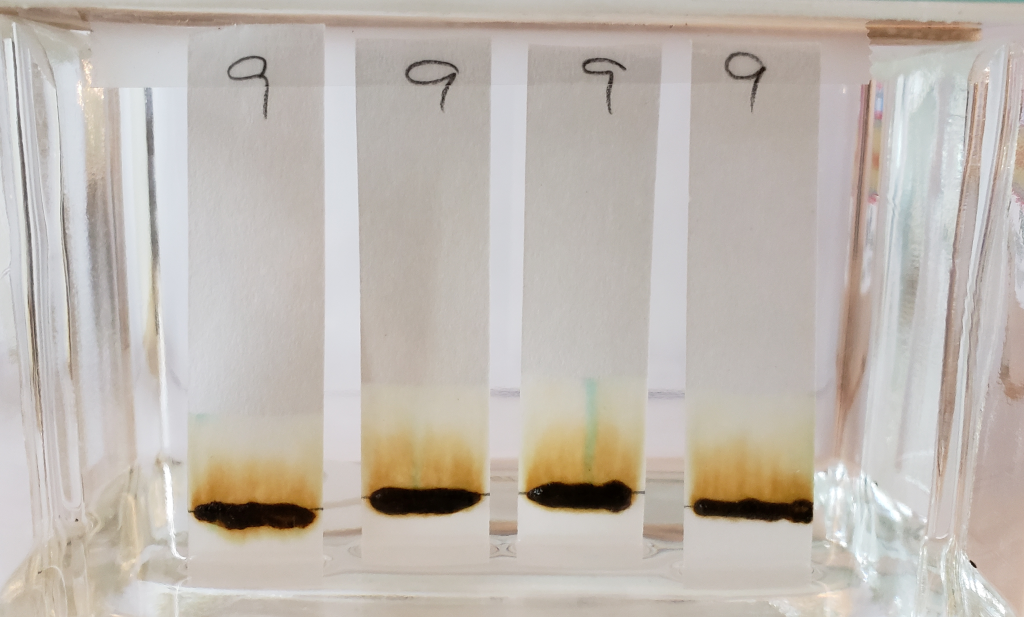
The faint green-blue dye that was noticeable in previous tests of sample #9 is particularly present in this condition. It was especially noticeable during processing. In the image below, all four strips show streaks of green-blue dye traveling upward with the solvent. The clearest is the strip second from the right.
After the strips were left in the glass tank for a full twenty minutes, the dye had collected at the solvent front. Some dyes streaks can also be seen rising just a few millimeters out of the application point. Particles of the same color can also be seen within the paste. It is clear that the green-blue dye is some form of powder or crystal mixed into the product.
1:1 Dilutions for 15 Minutes
The paper chromatography results using equal parts water and acetone, and equal parts water and isopropyl alcohol appeared very similar to the results of the dye-released pastes tested with the same dilutions. Nothing additional was revealed that was already noted in the earlier tests. This may be because the distilled water present in the diluted solvents was enough to reveal water-soluble dyes.
Discussion
The purpose of this article was first: toobserve and report the visible qualities of each product, such as theproduct packaging, and the color, scent, and texture of the productboth as a dry powder and after being mixed with liquid; and second:to determine the existence of dyes other than lawsone or lawsoneprecursor molecules through the use of paper chromatography.
None of the methods used in this article candefinitively determine the safety or quality of a product. Thus, itis not our intention to rate, review, or suggest any product outsideof the Ancient Sunrise brand. The fact that some products appearedsimilar to pure henna does not mean that they were void of additivesor adulterants not shown by these tests. Paper chromatography cannotshow the presence of non-dye chemicals such as pesticides. Giventhose disclaimers, let’s jump into what was observed.
Thepresence of red, orange, and green dyes in some samples indicate thatthose products included additional ingredients besides pure hennapowder. While all of the samples tested showed the presence of somelawsone, many samples displayed results inconsistent with the ASsample which we know to be 100% pure henna powder. When dye-releasedpastes were tested with 99% isopropyl alcohol, all samples except ASshowed dye that did not move with the solvent, staying low to theapplication line. Some samples were much darker in color, which isinconsistent with the pale yellow-green color that would appear withlawsone in a precursor state. It is unclear if some samples includedoxidized lawsone, and whether that lawsone was added duringmanufacturing or if other conditions such as the age or storage ofthe product may have led to the presence of oxidized lawsone.
Sample #2 showed a very deep orange color in all solvent conditions. When tested with 99% isopropyl alcohol, the deeper color dye was visible just above the application site. In 1:1 dilution tests, the dye traveled further up the strip, staining the strip orange from application to just under the solvent front. This suggests that there is an added water-soluble orange dye present in sample #2.
Sample #4 as a powder, as a paste, and when tested with 1:1 solvent dilutions.
Blue-green dye was visible in sample #9 when tested with 99% isopropyl alcohol. In diluted solvent conditions, the blue-green dye was no longer visible. This type of dye was most likely added to give the powder a greener color, rather than to affect the color outcome on the hair.
Left: Sample #9 tested with 99% isopropyl alcohol. Blue-green dye is visible. Right: Sample #9 tested with 1:1 dilutions. The lawsone staining overpowers blue-green dye visibility.
Comparison between sample #9 powder (left) and AS powder (right).
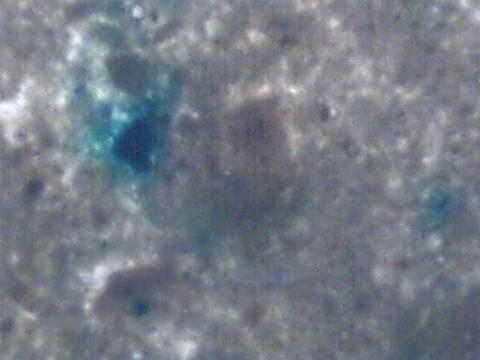
Because there is a marketing claim that a greener henna powder is fresher, adding green dye to henna powder is not an uncommon practice. Detailed information about henna powders “polished” with green dye can be found on page 39 of Chapter Four: Henna Science and Microscopy. Ironically enough, sample #9 was among the darker colored powders and pastes in the group, so the addition of green dye did not seem to do what it intended. Below is an image at 60x magnification of a henna powder which shows added green dye.
A sample of henna powder under a microscope. Green dye powder or dyed sand is mixed into this sample.
Limitationsand Considerations
Paperchromatography is only one type of chromatography, and not as exactas methods accessible in a certified laboratory. High-performancethin-layer chromatography, for example, is capable of separating dyesinto much clearer bands, and then a scientist can calculate andcompare the distance of those bands between the application point andsolvent front to determine more about the nature of each dye. In manycases, reactants can be applied to chromatography results to causesubstances to be visible if they are not already. Access to suchmethods would have been beneficial. An example of high-performancethin-layer chromatography can bee seen on page 22 in HennaScience and Microscopy.
Additionally, somesamples varied in age, which can affect the quality of a powder tosome degree. That being said, pure henna products have a shelf lifeof several years as long as they are kept sealed and in a cool, dryenvironment. Because the products tested may have containedadditional unknown ingredients, it is difficult to say whether thosespecific non-henna ingredients may have broken down or changed withtime.